

Who Invented Electricity? The Real Story Explained
Electricity powers nearly everything around us. From smartphones and refrigerators to hospitals and massive cities glowing at night, modern life would collapse without it. Yet one fascinating question still sparks debate in classrooms, documentaries, and online searches every single day: who invented electricity?
The answer is more complicated than most people expect.
Unlike the invention of a car or a telephone, electricity was not created by one person sitting alone in a workshop. In reality, electricity existed in nature long before humans understood it. Lightning storms, electric fish, and static energy all existed for thousands of years. What changed over time was humanity’s ability to study, control, and use electrical energy.
That means nobody truly “invented” electricity in the traditional sense. Instead, many brilliant scientists, inventors, and researchers contributed discoveries over centuries. Some uncovered the principles of electric current, while others built machines, batteries, generators, and power systems that transformed civilization forever.
This article explores the real story behind who invented electricity, the key inventors involved, the timeline of discoveries, and how electricity evolved into the backbone of modern society.
Did Someone Actually Invent Electricity?
This is the first thing people often misunderstand.
Electricity is a natural phenomenon, not a manufactured object. Humans did not create it from nothing. Instead, scientists discovered how it works and learned how to harness electrical power safely.
Therefore, when people ask who invented electricity, they are usually asking one of these questions:
- Who first discovered electricity?
- Who explained electrical science?
- Who made electricity useful?
- Who invented electric power systems?
Different people played different roles in answering those questions.
The Ancient Discovery of Static Electricity
Long before modern science existed, ancient civilizations noticed strange electrical effects.
Around 600 BC, the Greek philosopher Thales of Miletus observed that rubbing amber with fur attracted feathers and dust. Today, we know this as static electricity.
Although Thales did not fully understand electrical charge, his observations marked one of the earliest recorded studies of electric phenomena.
Early Examples of Natural Electricity
Ancient people encountered electricity through:
- Lightning storms
- Electric eels
- Static shocks
- Magnetic stones
- Atmospheric energy
At that point, however, electricity remained mysterious and poorly understood.
William Gilbert: The Father of Electrical Science
When discussing who invented electricity, one important figure is William Gilbert.
In the late 1500s, Gilbert studied magnetism and electrical attraction carefully. He introduced the Latin word “electricus,” which later evolved into the word electricity.
Gilbert’s Contributions
William Gilbert helped electrical science by:
- Studying static electricity
- Investigating magnetic fields
- Explaining electrical attraction
- Separating magnetism from other natural forces
His scientific methods influenced generations of researchers and laid the foundation for modern electrical engineering.
Benjamin Franklin and the Famous Kite Experiment
Few names appear more often in conversations about who invented electricity than Benjamin Franklin.
Franklin did not invent electricity, but he made groundbreaking discoveries about electrical charge and lightning.
The Kite Experiment
In 1752, Franklin reportedly flew a kite during a thunderstorm with a metal key attached to the string. The experiment demonstrated that lightning carried electrical energy.
This became one of the most famous science experiments in history.
Franklin’s Electrical Discoveries
Benjamin Franklin introduced important ideas such as:
- Positive and negative charges
- Electrical conductors
- Electrical terminology
- Lightning rods
His work helped people understand that lightning and electricity were connected.
Luigi Galvani and Bioelectricity
Another major contributor to the story of who invented electricity was Luigi Galvani.
During the 1780s, Galvani discovered that frog muscles twitched when exposed to electric sparks. He believed animals contained a special form of electricity.
This discovery launched the study of bioelectricity and inspired future inventors to experiment further.
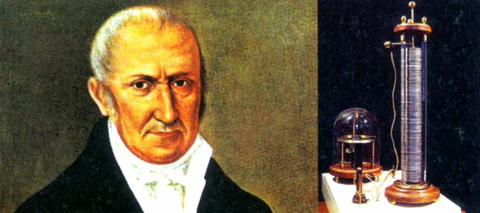
Alessandro Volta Invented the First Battery
If one person deserves enormous credit in the history of electricity, it is Alessandro Volta.
Volta disagreed with Galvani’s animal electricity theory. Instead, he believed electricity came from chemical reactions between metals.
The Voltaic Pile
In 1800, Volta invented the voltaic pile, the world’s first true electric battery.
The device produced continuous electric current using layers of:
- Zinc
- Copper
- Saltwater-soaked cardboard
This invention completely changed science because researchers could finally generate controlled electricity whenever needed.
The electrical unit “volt” was later named after him.
Michael Faraday Revolutionized Electricity
When historians discuss who invented electricity systems, Michael Faraday always appears near the top.
Faraday transformed theoretical science into practical electrical technology.
Faraday’s Major Discoveries
He discovered:
- Electromagnetic induction
- Electric motors
- Electric generators
- Principles of transformers
His experiments showed that moving magnets could generate electric current.
That discovery became the foundation of modern power generation.
Why Faraday Changed the World
Without Faraday’s discoveries:
- Power plants would not function
- Electric motors would not exist
- Large-scale electricity generation would fail
Many experts consider him one of the greatest experimental scientists in history.
Thomas Edison and Electric Light
People often assume Thomas Edison invented electricity. He did not. However, he played a major role in making electricity practical for homes and businesses.
Edison’s Most Famous Invention
In 1879, Edison improved the incandescent light bulb and developed commercial electrical systems.
More importantly, he created complete electric power networks including:
- Power stations
- Wiring systems
- Light sockets
- Electrical meters
This allowed cities to adopt electric lighting on a massive scale.
Edison’s Real Contribution
Edison’s genius was commercialization.
He turned electrical science into a working industry that ordinary people could use daily.
Nikola Tesla and Alternating Current
No discussion about who invented electricity feels complete without Nikola Tesla.
Tesla was one of the most brilliant electrical inventors of all time.
Tesla’s Greatest Achievement
Tesla developed alternating current systems, commonly known as AC power.
At the time, Edison promoted direct current or DC electricity. However, DC struggled to travel long distances efficiently.
Tesla’s AC system solved that problem.
Why AC Electricity Won
Alternating current allowed:
- Long-distance power transmission
- Cheaper electricity distribution
- Large electrical grids
- Modern urban electrification
Today, most global power systems still rely on Tesla’s AC principles.
The War of Currents
The competition between Edison and Tesla became known as the War of Currents.
Direct Current vs Alternating Current
| Feature | DC Power | AC Power |
|---|---|---|
| Inventor | Edison | Tesla |
| Distance Efficiency | Poor | Excellent |
| Voltage Conversion | Difficult | Easy |
| Modern Usage | Batteries | Power grids |
Eventually, alternating current became the standard worldwide.
Key Scientists Who Helped Shape Electricity
The history of electricity includes many contributors besides the most famous names.
Important Figures in Electrical History
| Scientist | Contribution |
|---|---|
| André-Marie Ampère | Electromagnetism |
| Georg Ohm | Ohm’s Law |
| James Clerk Maxwell | Electromagnetic theory |
| Heinrich Hertz | Radio waves |
| Joseph Swan | Early light bulbs |
| Charles Coulomb | Electric force laws |
Electricity evolved through teamwork across generations.
How Electricity Changed Human Civilization
Once scientists learned to control electricity, the world transformed rapidly.
Major Impacts of Electricity
Electricity changed:
- Transportation
- Medicine
- Communication
- Manufacturing
- Entertainment
- Education
- Computing
- Healthcare
Modern technology depends heavily on electrical systems.
Without electricity, there would be no:
- Internet
- Television
- Smartphones
- Refrigeration
- Air conditioning
- Modern hospitals
It completely reshaped daily life.
Common Myths About Who Invented Electricity
Many myths still confuse people today.
Myth 1: Edison Invented Electricity
False. Edison improved electrical systems and light bulbs but did not invent electricity itself.
Myth 2: Tesla Created Electricity
Tesla revolutionized electrical transmission but did not invent electricity.
Myth 3: Franklin Discovered Electricity Completely
Franklin studied lightning and electrical charge, but electricity was already known in earlier scientific studies.
Myth 4: One Person Deserves All the Credit
Electricity developed through centuries of discoveries by many scientists.
Why the Question Is So Difficult
The phrase “invented electricity” oversimplifies a massive scientific journey.
Electricity involves:
- Physics
- Chemistry
- Engineering
- Magnetism
- Energy systems
No single inventor controlled every part of its development.
Instead, history unfolded gradually as each scientist built upon previous discoveries.
That’s why experts usually say electricity was discovered and developed rather than invented outright.
Timeline of Major Electricity Discoveries
Here’s a simplified timeline showing how electrical science evolved.
| Year | Event |
|---|---|
| 600 BC | Thales studies static electricity |
| 1600 | William Gilbert coins electrical terms |
| 1752 | Franklin studies lightning |
| 1780s | Galvani researches bioelectricity |
| 1800 | Volta invents battery |
| 1831 | Faraday discovers induction |
| 1879 | Edison improves light bulb |
| 1880s | Tesla develops AC power |
This timeline reveals how electrical innovation happened step by step.
Electricity in the Modern World
Today, electricity powers nearly every major industry.
Industries Dependent on Electricity
- Artificial intelligence
- Telecommunications
- Renewable energy
- Electric vehicles
- Robotics
- Data centers
- Medical technology
- Aerospace engineering
As society grows more digital, electricity becomes even more important.
Renewable Energy and the Future
The future of electricity is shifting toward cleaner energy sources.
Modern Electrical Innovations
Scientists now focus on:
- Solar energy
- Wind power
- Battery storage
- Smart grids
- Electric transportation
- Sustainable energy systems
Interestingly, many of these technologies still rely on principles discovered by Faraday, Tesla, and Volta centuries ago.
Why Learning About Electricity Still Matters
Understanding who invented electricity teaches more than science history.
It also shows:
- How innovation evolves
- Why teamwork matters
- How ideas improve over time
- The value of curiosity and experimentation
Scientific progress rarely happens overnight.
Instead, discoveries build slowly through generations of persistence and creativity.
Fun Facts About Electricity
Here are a few surprising facts many people do not know.
Interesting Electrical Facts
- Lightning can reach temperatures hotter than the sun’s surface.
- Electric eels can generate powerful shocks naturally.
- The human brain uses electrical signals constantly.
- Static electricity can move tiny particles instantly.
- Some fish navigate using electric fields.
Nature has used electricity long before humans understood it.
Final Answer: Who Invented Electricity?
So, who invented electricity?
The honest answer is that no single person invented electricity. Electricity already existed in nature. However, many brilliant scientists discovered its principles and transformed it into practical technology.
William Gilbert helped define electrical science. Benjamin Franklin explored lightning and electrical charge. Alessandro Volta invented the battery. Michael Faraday uncovered electromagnetic induction. Thomas Edison built commercial power systems. Nikola Tesla revolutionized electrical transmission.
Each inventor added another piece to the puzzle.
Together, their discoveries created the electrified world we live in today.
That’s what makes the story so fascinating. Electricity was not born from one genius moment. It emerged through centuries of experiments, failures, breakthroughs, and relentless curiosity.
If you enjoyed learning about who invented electricity, share this article with others or join the conversation by discussing which inventor you believe had the biggest impact on modern life.