

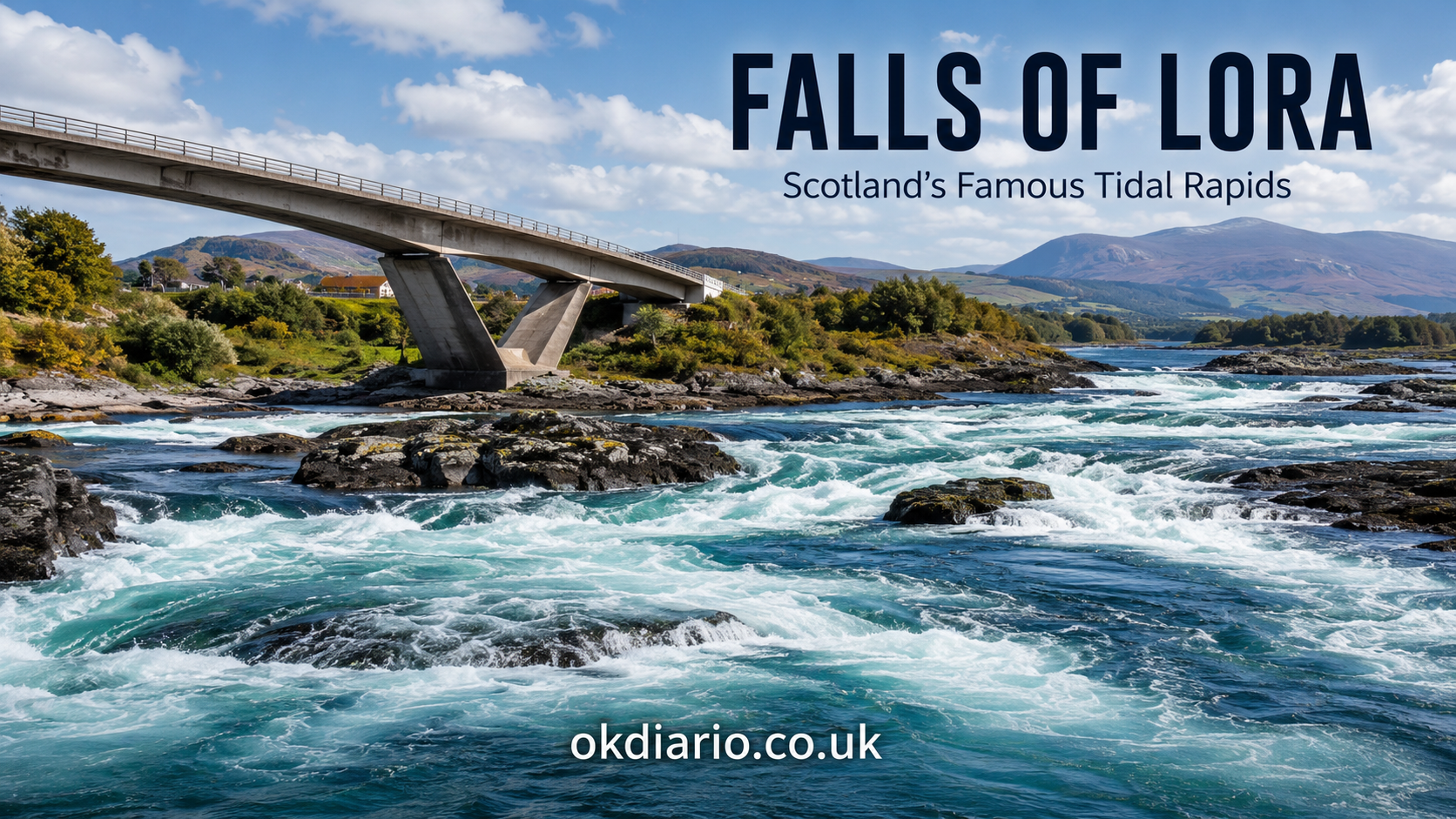
Falls of Lora Travel Guide: Best Time to Visit and What to Expect
The Falls of Lora Travel Guide is an essential resource for anyone planning to visit one of Scotland’s most fascinating natural attractions. Despite the name, the Falls of Lora are not traditional waterfalls. Instead, they are powerful tidal rapids created by the meeting of seawater and freshwater, producing a dramatic natural spectacle that has attracted visitors, photographers, kayakers, and nature lovers for generations.
Located on Scotland’s west coast near the town of Oban, the Falls of Lora showcase the remarkable power of changing tides. Whether you are interested in scenic landscapes, outdoor adventure, wildlife, or simply exploring one of Scotland’s hidden gems, this guide explains everything you need to know before your trip.
From the best time to visit and how the tidal phenomenon works to nearby attractions and practical travel tips, this comprehensive guide will help you make the most of your visit.
Key Takeaways
- The Falls of Lora are tidal rapids rather than a traditional waterfall.
- The strongest rapids occur during large tidal changes, especially around spring tides.
- The Connel Bridge provides one of the best viewpoints for visitors.
- Popular activities include sightseeing, photography, kayaking, and wildlife watching.
- Visiting at the right tide time greatly improves the overall experience.
Main Article
What Are the Falls of Lora?
The Falls of Lora are a unique tidal rapid located at the narrow entrance between Loch Etive and Loch Linnhe near the village of Connel, approximately five miles north of Oban in Argyll and Bute, Scotland.
Unlike a river waterfall, these rapids are created by enormous volumes of seawater rushing through the narrow channel as tides rise and fall. The changing water levels generate powerful standing waves, whirlpools, and fast-moving currents that can be both spectacular and dangerous.
This natural phenomenon has made the Falls of Lora one of Scotland’s best-known tidal attractions.
Where Are the Falls of Lora?
The Falls of Lora are easy to reach by road from Oban.
| Information | Details |
|---|---|
| Location | Connel, Argyll and Bute, Scotland |
| Nearest Town | Oban |
| Distance from Oban | Approximately 5 miles (8 km) |
| Type of Attraction | Tidal Rapids |
| Best Viewing Point | Connel Bridge |
| Suitable For | Families, photographers, hikers, kayakers |
Visitors can easily combine the Falls of Lora with a day exploring the surrounding Highlands.
How Do the Falls of Lora Work?
The Falls of Lora are formed because Loch Etive is connected to the sea through a narrow opening beneath Connel Bridge.
As the tide changes:
- Water flows rapidly into Loch Etive during rising tides.
- Water rushes back toward the sea during falling tides.
- The narrow channel compresses the flow.
- Powerful standing waves and turbulent rapids develop.
The larger the tidal difference, the more dramatic the rapids become.
This process repeats every day, although the intensity varies depending on tidal conditions.
Best Time to Visit the Falls of Lora
Timing is everything when visiting.
The rapids are most impressive during:
- Spring tides
- One to two hours before peak tide changes
- Calm weather with good visibility
Best Seasons
| Season | What to Expect |
|---|---|
| Spring | Pleasant weather and vibrant scenery |
| Summer | Longer daylight hours and ideal sightseeing |
| Autumn | Beautiful colors and fewer visitors |
| Winter | Dramatic atmosphere but colder conditions |
Summer offers excellent accessibility, while autumn provides quieter viewpoints and attractive landscapes.
Before visiting, check local tide tables to ensure you arrive when the rapids are most active.
What Can You Expect During Your Visit?
A visit to the Falls of Lora offers much more than simply watching moving water.
Visitors can enjoy:
- Powerful tidal waves
- Scenic Highland landscapes
- Excellent photography opportunities
- Coastal wildlife
- Historic surroundings
- Peaceful walking routes
The experience changes throughout the day as tides shift, making every visit slightly different.
Best Viewpoints
Connel Bridge
The historic Connel Bridge provides the most famous viewpoint.
From here visitors can safely observe:
- Standing waves
- Swirling currents
- White-water rapids
- Kayakers navigating the channel
Shoreline Walks
Several walking paths near the bridge offer lower viewpoints where visitors can appreciate the scale of the tidal movement.
Always remain on designated paths and avoid approaching the water’s edge.
Activities Around the Falls of Lora
Photography
The Falls of Lora are among western Scotland’s most photogenic natural attractions.
Excellent subjects include:
- Sunrise over the rapids
- Dramatic clouds
- Long-exposure water photography
- Wildlife
- Connel Bridge
A tripod is particularly useful for landscape photography.
Kayaking
Experienced sea kayakers travel from around the world to paddle the Falls of Lora.
The rapids create:
- Standing waves
- Surf opportunities
- Challenging currents
However, this activity should only be attempted by skilled paddlers with appropriate equipment and local knowledge.
Wildlife Watching
Keep an eye out for local wildlife, including:
- Seals
- Otters
- Herons
- Gulls
- Cormorants
- Various seabirds
Lucky visitors may even spot dolphins in nearby coastal waters.
Walking
The surrounding area offers pleasant walking routes with beautiful coastal scenery and panoramic views over Loch Etive.
Nearby Attractions Worth Visiting
The Falls of Lora make an excellent starting point for exploring Scotland’s west coast.
Popular nearby attractions include:
Oban
Often called the “Gateway to the Isles,” Oban offers:
- Seafood restaurants
- Harbor views
- Local shops
- Historic sites
- Ferry connections to Scottish islands
Dunstaffnage Castle
One of Scotland’s oldest stone castles, Dunstaffnage Castle overlooks the sea and provides fascinating insight into medieval Scottish history.
Loch Etive
Loch Etive is ideal for:
- Scenic drives
- Boat trips
- Wildlife observation
- Hiking
- Photography
Ben Cruachan
Outdoor enthusiasts may also explore nearby mountain trails with panoramic Highland views.
Safety Tips for Visitors
Although beautiful, the Falls of Lora are extremely powerful.
Keep these safety tips in mind:
- Stay behind safety barriers.
- Never enter the water near the rapids.
- Watch children closely.
- Wear sturdy footwear.
- Check weather forecasts.
- Monitor tide times before arrival.
- Exercise caution when taking photographs near cliffs or rocks.
Strong currents can develop quickly, even during seemingly calm conditions.
Sample Half-Day Itinerary
| Time | Activity |
|---|---|
| 9:00 AM | Arrive in Connel |
| 9:30 AM | Walk to Connel Bridge |
| 10:00 AM | Watch peak tidal activity |
| 11:00 AM | Photography and wildlife watching |
| 12:00 PM | Explore nearby walking trails |
| 1:00 PM | Lunch in Oban |
This itinerary provides a relaxed way to enjoy the area’s highlights.
Travel Tips for First-Time Visitors
To make your visit more enjoyable:
- Check tide tables before leaving.
- Bring waterproof clothing.
- Wear comfortable walking shoes.
- Carry binoculars if interested in wildlife.
- Arrive early during summer.
- Pack a camera with extra batteries.
- Allow extra time to explore nearby attractions.
Planning ahead ensures you experience the rapids at their most dramatic.
Why the Falls of Lora Are So Special
Many coastal locations experience changing tides, but few produce rapids as spectacular as the Falls of Lora.
Several factors make this site unique:
- Rare tidal phenomenon
- Beautiful Highland setting
- Easy accessibility
- Opportunities for adventure sports
- Excellent wildlife viewing
- Rich local history
- Outstanding photography locations
It combines natural beauty with fascinating geology and oceanography, making it one of Scotland’s most distinctive attractions.
Frequently Asked Questions
1. Are the Falls of Lora an actual waterfall?
No. They are tidal rapids formed by fast-moving seawater flowing through a narrow channel between Loch Etive and Loch Linnhe.
2. When is the best time to see the Falls of Lora?
The best time is around peak tidal changes, especially during spring tides when the water movement is strongest.
3. Can beginners kayak at the Falls of Lora?
No. The powerful currents and standing waves make the rapids suitable only for experienced sea kayakers with proper safety knowledge.
4. Is there an entrance fee?
No. Viewing the Falls of Lora from public areas such as Connel Bridge is generally free.
5. How long should I spend visiting?
Most visitors spend one to three hours enjoying the viewpoints, walking trails, and surrounding scenery, though many combine the visit with a day trip to Oban and nearby attractions.
6. Is the Falls of Lora suitable for families?
Yes. Families can safely enjoy the viewpoints and walking areas, provided children are supervised and visitors stay away from hazardous areas near the water.
7. Can I visit throughout the year?
Yes. The Falls of Lora can be visited year-round, although weather conditions and daylight hours vary by season. Checking tide times before your visit is recommended regardless of the time of year.
Conclusion
The Falls of Lora Travel Guide highlights why this remarkable tidal phenomenon deserves a place on every Scotland itinerary. Unlike a conventional waterfall, the Falls of Lora showcase the extraordinary power of the sea as tides surge through a narrow channel, creating dramatic rapids that captivate visitors throughout the year.
Whether you come for photography, wildlife, kayaking, or simply to admire one of Scotland’s most unusual natural wonders, careful planning will help you enjoy the experience at its best. By timing your visit with the tides, following local safety advice, and exploring nearby attractions such as Oban, Loch Etive, and Dunstaffnage Castle, you can turn a short stop into a memorable day of discovery on Scotland’s spectacular west coast.