

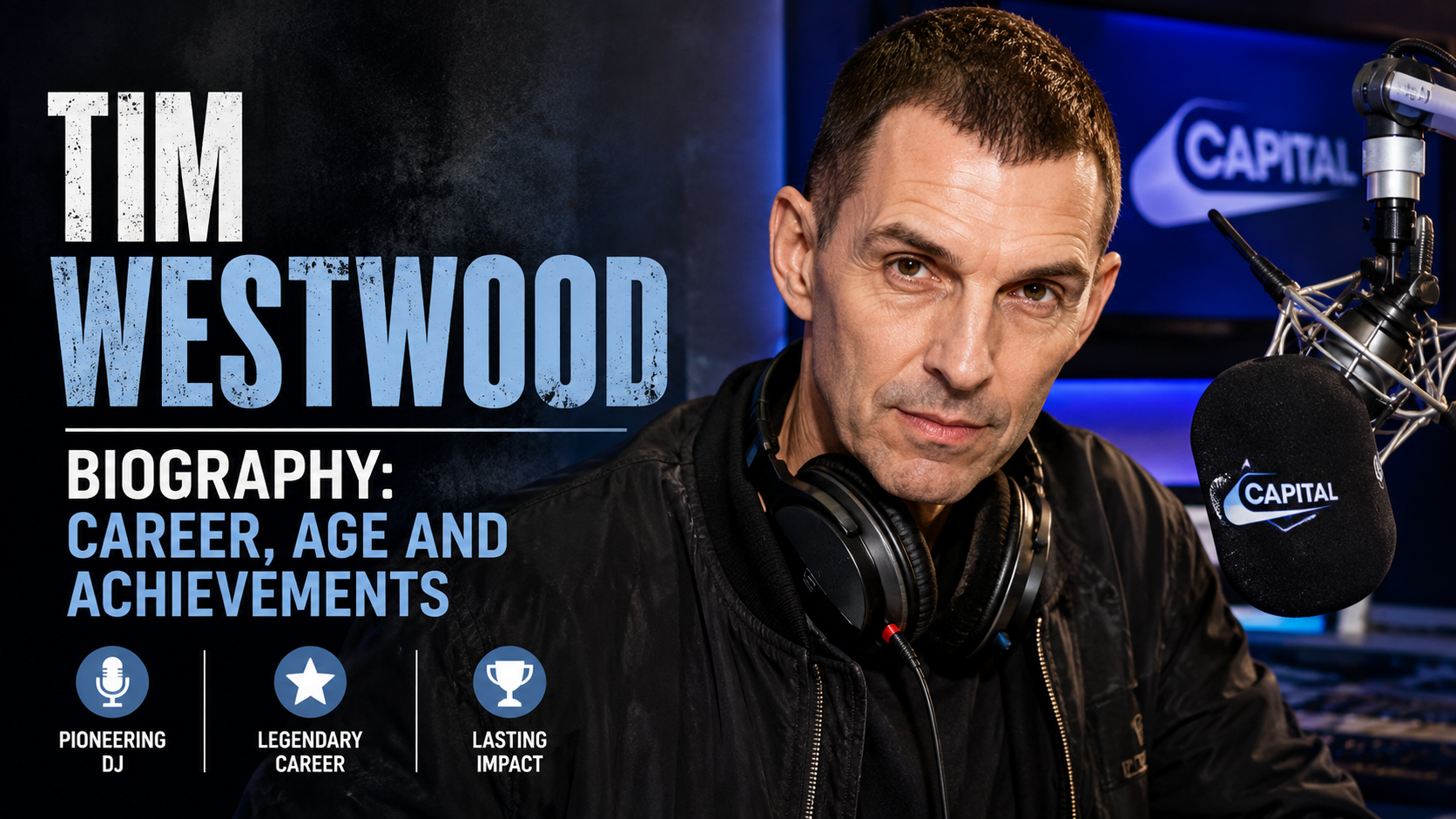
Tim Westwood Biography: Career, Age and Achievements
Tim Westwood Biography is the story of one of the most recognizable and influential British DJs associated with hip-hop, rap and urban music broadcasting. Over several decades, Westwood moved from London’s pirate-radio scene to major national platforms, helping introduce British audiences to artists and sounds that would become central to modern hip-hop culture.
Born in Lowestoft, Suffolk, in 1957, Westwood developed an interest in music and DJing before building a career that eventually included LWR, Kiss FM, Capital FM, BBC Radio 1, BBC 1Xtra and television. His Radio 1 Rap Show became particularly important to UK hip-hop listeners, while his television work included hosting Pimp My Ride UK.
However, a complete Tim Westwood Biography also needs to address the serious allegations and criminal charges that have affected his public reputation in recent years. Those developments are separate from his earlier professional achievements and should be discussed carefully, distinguishing allegations and court proceedings from established facts.
This article examines Westwood’s early life, rise in radio, contribution to hip-hop culture, television career, major professional milestones, and the legal controversy that has reshaped how his career is viewed.
Key Takeaways
- Tim Westwood was born on October 3, 1957, in Lowestoft, Suffolk, England.
- He became prominent through London’s pirate-radio and club scenes before joining Capital FM and later BBC Radio 1.
- His BBC Radio 1 Rap Show helped establish him as a major UK hip-hop broadcaster.
- Westwood also hosted Pimp My Ride UK and worked with several other music and television platforms.
- His influence on British hip-hop broadcasting was substantial, particularly in connecting UK audiences with major American rap artists.
- His later career has been overshadowed by allegations of sexual misconduct, which he has denied, and criminal charges that he has pleaded not guilty to.
Biography Table
| Detail | Information |
|---|---|
| Full Name | Timothy Westwood |
| Date of Birth | October 3, 1957 |
| Age | 68 as of August 2026 |
| Birthplace | Lowestoft, Suffolk, England |
| Nationality | British |
| Profession | DJ, radio presenter and television presenter |
| Education | Norwich School and the Hewett School |
| Years Active | From the early 1980s |
| Known For | BBC Radio 1 Rap Show, Capital FM, Capital Xtra and Pimp My Ride UK |
| Major Achievements | Long-running UK radio career and prominent role in hip-hop broadcasting |
| Estimated Net Worth | No sufficiently reliable public figure is included here |
Who Is Tim Westwood?
Tim Westwood is a British DJ and broadcaster whose career became closely associated with hip-hop, rap, R&B and related music scenes.
His importance comes largely from his role as a broadcaster and tastemaker. During an era when American hip-hop was still developing its mainstream audience in Britain, Westwood provided a platform for established and emerging artists.
His radio shows featured major international names and helped expose British listeners to the wider American rap scene. He became particularly associated with high-profile interviews, artist freestyles, mixes and live broadcasts.
Westwood’s distinctive presentation style also made him instantly recognizable. Whether listeners appreciated or criticized his approach, his name became closely linked with British hip-hop radio.
Tim Westwood’s Early Life
Timothy Westwood was born in Lowestoft, Suffolk, on October 3, 1957. His father, Bill Westwood, later became the Anglican Bishop of Peterborough.
The family moved to Norwich when Westwood was eight years old after his father became vicar of St Peter Mancroft. Westwood attended Norwich School and later the Hewett School.
His early educational experience was not especially straightforward. Biographical accounts have reported that he was diagnosed with dyslexia and struggled academically during his school years.
Rather than following a conventional professional path, Westwood became increasingly interested in music, nightlife and DJ culture.
That interest eventually took him into London’s club and pirate-radio environment, where he began developing the skills that would define his career.
How Tim Westwood Started His DJ Career
Westwood’s professional journey began in London’s club scene during the early 1980s.
According to accounts of his career, he initially worked at the Gossips nightclub before pushing for opportunities to DJ. He became increasingly involved with London’s developing hip-hop culture and soon moved into pirate radio.
His work with London pirate station LWR was an important early step.
At the time, pirate radio played a significant role in exposing listeners to music that mainstream broadcasters did not always prioritize. For a DJ interested in emerging hip-hop, these stations provided an opportunity to build an audience and develop a distinctive broadcasting identity.
Westwood later became associated with Kiss FM, where he was a co-owner. His growing reputation eventually led to a move to Capital FM in 1987.
Tim Westwood and Capital FM
Joining Capital FM represented a major turning point in Westwood’s career.
Capital was a major commercial radio station, giving Westwood access to a much broader audience than London’s pirate-radio scene could provide.
His programming helped establish rap and hip-hop as important parts of commercial British radio. He also became known for bringing international artists and contemporary American hip-hop to British listeners.
This period helped build the reputation that eventually attracted the attention of BBC Radio 1.
Tim Westwood at BBC Radio 1
One of the defining chapters in any Tim Westwood Biography is his move to BBC Radio 1 in 1994.
Westwood was brought in to lead a new rap programme, marking an important moment for hip-hop broadcasting on a major national radio network. His first Radio 1 rap show was launched with a live concert featuring The Notorious B.I.G. and Puff Daddy, reflecting the international ambitions of the programme.
The show became one of the UK’s most prominent platforms for rap and hip-hop.
For listeners, its appeal was straightforward: Westwood provided access to music, artists and interviews that could be difficult to find elsewhere on mainstream British radio.
His programmes featured major figures from American hip-hop alongside British and emerging artists. Over time, his reputation as a tastemaker grew considerably.
Why the Radio 1 Rap Show Mattered
Westwood’s Radio 1 position arrived during a period when hip-hop was becoming increasingly influential worldwide.
His programme helped connect several parts of the music ecosystem:
- American rap and British listeners
- Established artists and emerging performers
- Underground hip-hop and mainstream radio
- DJs, producers and record labels
- UK rap culture and international hip-hop
That role made him more than a conventional radio presenter. He became part of the infrastructure through which hip-hop reached a larger British audience.
Tim Westwood and UK Hip-Hop Culture
Westwood’s influence on UK hip-hop is best understood through his role as a broadcaster rather than as a recording artist.
Radio was particularly important to music discovery before streaming platforms became dominant. A DJ with a major national audience could significantly influence which artists listeners discovered.
Westwood’s programmes provided exposure to genres including:
- Hip-hop
- Rap
- Grime
- R&B
- Dancehall
- Reggae
- Bashment
His interviews with major artists also contributed to his reputation as an important bridge between British audiences and international music stars.
The scale of that influence is difficult to reduce to a single achievement. Instead, it developed through years of broadcasting, artist interviews, mixes, live events and music promotion.
Tim Westwood’s Television Career
Westwood expanded beyond radio and became a television presenter as well.
His television career included programmes connected with music and youth culture. He also presented Pimp My Ride UK, the British adaptation of the popular MTV car-customization series.
The UK version ran for three seasons from 2005 to 2007, with Westwood presenting episodes in which vehicles were extensively customized around their owners’ personalities and interests.
The programme introduced Westwood to viewers who may not have followed his radio career closely.
It also demonstrated his ability to move between music broadcasting and mainstream entertainment television.
Tim Westwood and Pimp My Ride UK
Pimp My Ride UK became one of Westwood’s most recognizable television roles.
The programme combined cars, customization and entertainment with the style associated with MTV’s broader youth-culture programming.
For Westwood, the show represented a significant expansion of his public profile. He was no longer known only as a radio DJ; he had become a recognizable television personality as well.
His television career therefore formed an important secondary part of his professional identity.
His Later BBC Career
Westwood remained with the BBC for nearly two decades.
During his later years at the corporation, he also presented a weekday drivetime programme on BBC 1Xtra before returning his focus to the Saturday night Rap Show.
In July 2013, the BBC announced that Westwood would leave Radio 1 and 1Xtra as part of planned schedule changes. His departure took effect in September that year.
By then, his BBC career had become one of the longest and most significant chapters in his professional life.
Return to Commercial Radio
After leaving the BBC, Westwood returned to Capital’s network, joining Capital Xtra.
His later radio work continued to focus heavily on hip-hop and urban music. The move allowed him to maintain a presence within the genre that had defined much of his professional career.
For listeners who had followed him from his pirate-radio days through Capital FM and Radio 1, the move represented a return to a commercial-radio environment.
Tim Westwood’s Influence on Music Broadcasting
The significance of Tim Westwood Biography extends beyond a list of jobs.
His career illustrates how the British music industry changed over several decades.
When Westwood began broadcasting, hip-hop was far less established within mainstream British media than it is today. Radio DJs and specialist programmes played an important role in introducing listeners to new sounds.
Westwood’s career coincided with the growth of hip-hop from a relatively specialist culture into a major global industry.
His work helped create a space where rap artists could reach British audiences through interviews, performances, mixes and specialist programming.
That influence is part of his enduring professional legacy.
Major Career Achievements
Several milestones stand out when examining Westwood’s career:
- Early pirate-radio work: He developed his broadcasting identity through London’s independent radio scene.
- Capital FM: His 1987 move to Capital gave him a major commercial-radio platform.
- BBC Radio 1: He became the presenter of the network’s influential rap programme from 1994.
- International artist interviews: His programmes featured prominent figures from global hip-hop.
- BBC 1Xtra: He also became part of the BBC’s dedicated digital urban-music service.
- Television: He hosted Pimp My Ride UK and other music-related programmes.
- Capital Xtra: After leaving the BBC, he continued broadcasting in commercial radio.
Together, these achievements explain why Westwood became such a recognizable name in British hip-hop broadcasting.
Controversies and Legal Proceedings
A responsible Tim Westwood Biography must also address the serious allegations that emerged publicly in 2022 and the subsequent legal developments.
In 2022, investigations by BBC News and The Guardian reported allegations of sexual misconduct involving several women. Westwood denied the allegations. A BBC Three documentary, Tim Westwood: Abuse of Power, examined the accusations and questions surrounding his professional environment.
The BBC later commissioned an independent review of its handling of concerns connected with Westwood. In 2025, the corporation acknowledged failures and “missed opportunities” after the review examined its response to allegations and concerns about his behavior.
The matter subsequently moved into the criminal justice system.
In 2025, Westwood was charged with multiple sexual offences involving seven women and allegations spanning several decades. In December 2025, he pleaded not guilty to 15 charges, including rape, sexual assault and indecent assault. The case remains a matter for the courts, and allegations should not be presented as established facts before trial.
These developments are important because they have fundamentally changed the context in which his public career is discussed.
They should also be kept distinct from his earlier professional achievements. A biography can acknowledge his historical influence on music broadcasting while accurately reporting serious allegations and ongoing legal proceedings without prejudging the outcome.
What Is Tim Westwood’s Legacy?
Assessing Westwood’s legacy is complicated.
From a broadcasting perspective, his career represents an important period in the development of British hip-hop media. He worked across pirate radio, commercial radio, national broadcasting and television, giving him unusual longevity within the music industry.
His programmes helped introduce British audiences to major rap artists and contributed to the visibility of hip-hop on mainstream platforms.
At the same time, his later controversies have become an unavoidable part of the public record.
For that reason, it is more accurate to describe his legacy as contested rather than simply celebrated. His professional influence and the serious allegations against him are both part of the story, and neither should be ignored when discussing his career.
Frequently Asked Questions
How old is Tim Westwood?
Tim Westwood was born on October 3, 1957. As of August 2026, he is 68 years old.
Where was Tim Westwood born?
Tim Westwood was born in Lowestoft, Suffolk, England.
What is Tim Westwood best known for?
He is best known for his long career as a British hip-hop and rap broadcaster, particularly his BBC Radio 1 Rap Show and later work with Capital FM and Capital Xtra. He is also known for presenting Pimp My Ride UK.
When did Tim Westwood join BBC Radio 1?
Westwood joined BBC Radio 1 in 1994 to present its rap show. He remained associated with the BBC for nearly two decades before leaving in 2013.
Did Tim Westwood host Pimp My Ride UK?
Yes. Westwood hosted the UK version of Pimp My Ride, which ran for three seasons from 2005 to 2007.
What radio stations has Tim Westwood worked for?
His career has included London’s LWR, Kiss FM, Capital FM, BBC Radio 1, BBC 1Xtra and Capital Xtra.
Why is Tim Westwood controversial?
His later years in the public spotlight have been dominated by allegations of sexual misconduct and questions about the handling of concerns during his BBC career. He has denied the allegations. In 2025, he pleaded not guilty to criminal charges involving rape, sexual assault and indecent assault. The legal proceedings remain ongoing.
What is Tim Westwood’s net worth?
There is no sufficiently reliable, authoritative public figure for Tim Westwood’s current net worth. Online estimates vary considerably and are generally not supported by transparent financial evidence, so they should be treated cautiously.
Conclusion
The story told by a Tim Westwood Biography spans more than four decades of British music and broadcasting history. From London’s pirate-radio scene and Capital FM to BBC Radio 1 and television, Westwood built a career around hip-hop at a time when the genre was becoming increasingly important to mainstream audiences.
His Radio 1 Rap Show remains one of the defining parts of his professional history, while Pimp My Ride UK expanded his profile beyond radio. His long association with major artists and specialist music programming helped establish him as a prominent figure in UK hip-hop broadcasting.
Yet his biography cannot be separated from the serious allegations and criminal proceedings that emerged later in his life. Those allegations, which he has denied, and the subsequent court case have significantly altered the way his public legacy is discussed.
The most balanced understanding of Tim Westwood therefore requires both sides of the story: his documented influence on British music broadcasting and the serious legal and institutional issues that now form an important part of his public record.