

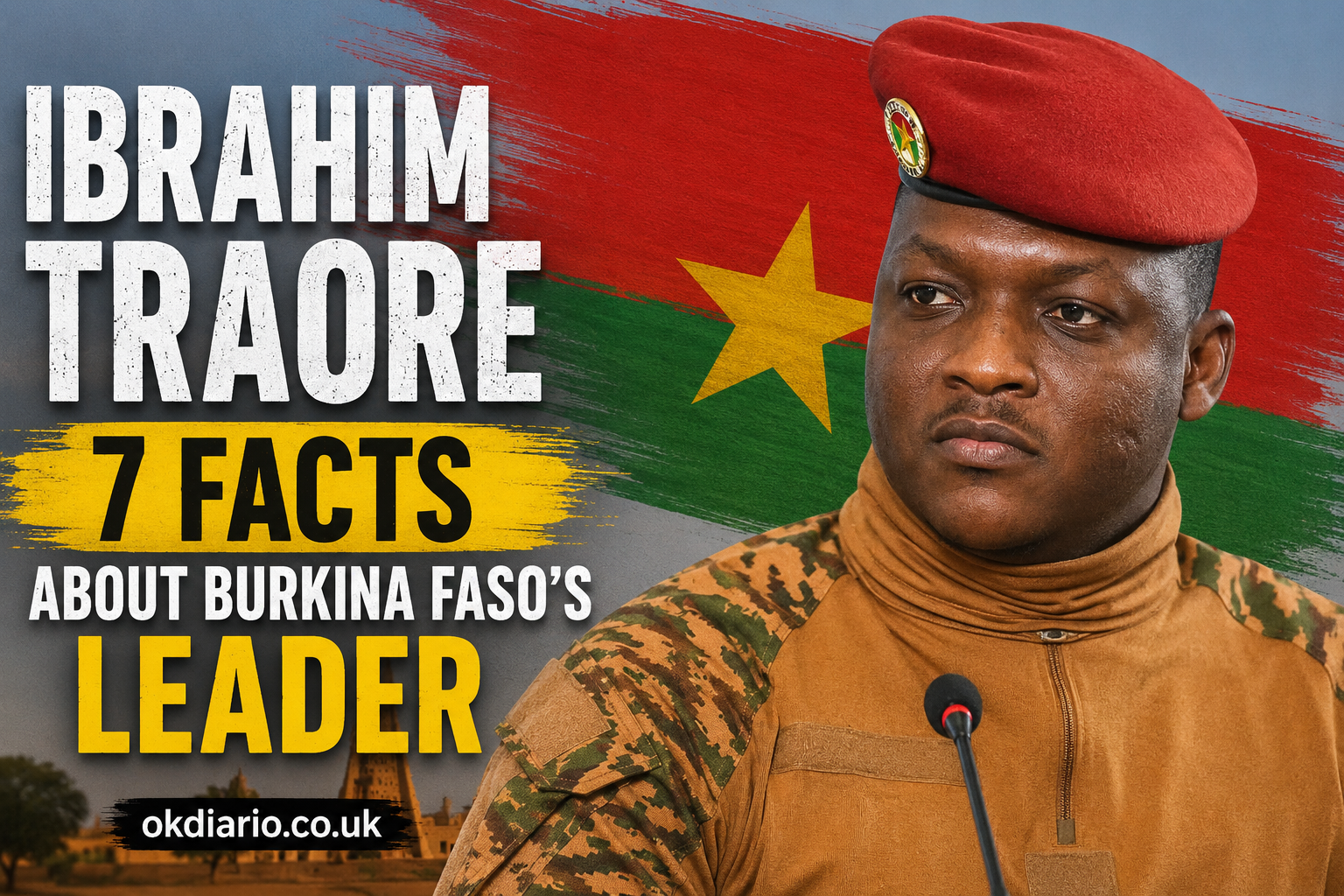
Why Ibrahim Traore Has Become a Global Talking Point
Some leaders slowly build their public image over decades. Others step into history almost overnight. Ibrahim Traore belongs to the second group.
In only a few years, his name has moved far beyond Burkina Faso. Today, people across Africa, Europe, the Middle East, and even the wider online political world search for Ibrahim Traore because he represents something bigger than one man in uniform. To some supporters, he is a bold Pan-African voice standing against foreign influence. To critics, he is a military ruler who came to power through a coup and has delayed a return to civilian democracy. That contrast is exactly why his story attracts so much attention.
Ibrahim Traore is not a typical modern political figure. He did not rise through a long party career, polished election campaigns, or years in parliament. Instead, he came from the military at a time when Burkina Faso was facing deep insecurity, public anger, and frustration with previous leadership. His message has often focused on sovereignty, national pride, security, and self-reliance. These ideas have made him popular among many young Africans who feel traditional politics has failed them.
However, his leadership is also complex. Burkina Faso continues to face serious challenges, including extremist violence, displacement, economic pressure, political restrictions, and international criticism. So, to understand Ibrahim Traore properly, we need to look beyond viral clips and social media praise. We need to study his background, his rise to power, his leadership style, and the debate around his rule.
This article breaks down seven important facts about Ibrahim Traore in a clear, human, and balanced way.
Ibrahim Traore Bio
| Bio Detail | Information |
|---|---|
| Full Name | Ibrahim Traore |
| Date of Birth | March 14, 1988 |
| Age | 38 years old as of 2026 |
| Profession | Military officer and political leader |
| Nationality | Burkinabe |
| Net Worth (approx.) | Not publicly verified |
| Notable Works / Achievements | Interim leader of Burkina Faso, Pan-African political messaging, military leadership, national sovereignty policies |
1. Ibrahim Traore Is One of Africa’s Youngest Leaders
One of the main reasons Ibrahim Traore attracts global attention is his age. Born on March 14, 1988, he became Burkina Faso’s leader while still in his thirties. In a continent where many presidents and political elites are much older, his youth immediately made him stand out.
This matters because age has become a powerful political symbol in Africa. Many young people across the continent often feel disconnected from older ruling classes. They see aging political systems, long-serving leaders, weak institutions, unemployment, corruption, and limited opportunity. So, when a young military officer like Ibrahim Traore appears on the national stage, many people naturally see him as a break from the past.
His supporters often describe him as energetic, direct, and closer to the frustrations of ordinary citizens. They argue that his youth gives him a sharper understanding of what a new generation wants. In their view, Ibrahim Traore reflects a hunger for change, dignity, and independence.
However, youth alone does not make a leader successful. A young leader still has to solve hard problems. Burkina Faso faces a violent insurgency, economic stress, food insecurity, and political tension. These issues cannot be solved by image or speeches alone. They require strong institutions, practical plans, disciplined governance, and long-term stability.
That is why Ibrahim Traore’s age is both an advantage and a test. It helps him connect with young people, but it also raises expectations. Many people who admire him want visible results, not just symbolic change. In politics, hope is powerful, but delivery is what decides legacy.
2. He Rose to Power Through a Military Coup in 2022
Ibrahim Traore became Burkina Faso’s leader after a military takeover on September 30, 2022. At the time, Burkina Faso was already in political crisis. Earlier that same year, another military leader, Paul-Henri Sandaogo Damiba, had removed the previous civilian government. Damiba had promised to improve security, but frustration grew when violence and instability continued.
Traore and his supporters argued that Damiba had failed to deal with the worsening security situation. This became the main reason given for the second coup of 2022. In simple terms, Burkina Faso experienced two military takeovers in the same year, both linked to anger over insecurity and the government’s inability to protect citizens.
This part of Ibrahim Traore’s story is important because it explains why opinions about him are so divided. Some people see him as a necessary figure who stepped in during a national emergency. They believe the country needed a stronger response and a more patriotic direction. Others see his rise as part of a dangerous pattern where military leaders replace civilian institutions instead of strengthening democracy.
Military coups often create mixed emotions. In moments of crisis, some citizens may welcome them because they are tired of slow political systems. However, coups also weaken constitutional order. They can silence opposition, reduce public debate, and make power less accountable.
Ibrahim Traore’s rise to power therefore sits at the heart of a bigger African discussion: when a country is under pressure, should security come before democracy, or can both be protected at the same time? That question continues to shape how the world views his leadership.
3. Security Is the Biggest Test of His Leadership
No serious discussion of Ibrahim Traore can ignore Burkina Faso’s security crisis. For years, the country has suffered attacks linked to armed extremist groups operating across the Sahel region. Villages have been targeted, civilians have been displaced, schools have closed, and many communities have lived under fear.
When Ibrahim Traore came to power, security was his central promise. He presented himself as a soldier ready to defend the nation and restore control. This message resonated with many Burkinabe citizens who had lost trust in previous leaders.
The challenge, however, is enormous. Burkina Faso is part of a troubled regional belt that includes Mali and Niger. Armed groups move across borders, exploit weak state control, and use local grievances to expand influence. In such an environment, military operations alone are rarely enough. A lasting solution usually needs security reform, community trust, economic development, intelligence work, local governance, and regional cooperation.
Ibrahim Traore’s government has placed strong emphasis on national defense and mobilization. Supporters argue that he has shown courage and seriousness in confronting the threat. They also believe his approach gives Burkina Faso more control over its own security choices.
Critics, meanwhile, say the security situation remains deeply worrying. They argue that military rule has not yet delivered the stability promised in 2022. In addition, human rights groups and international observers have raised concerns about abuses, restrictions, and civilian harm in the wider conflict.
This is where Ibrahim Traore’s leadership faces its hardest reality. Speeches can inspire people, but security is measured in daily life. Can farmers return to their fields? Can children go to school safely? Can displaced families go home? Can citizens travel without fear? These are the real questions that will define his rule.
4. Ibrahim Traore Is Known for Pan-African and Anti-Imperialist Messaging
Another major reason Ibrahim Traore has become popular online is his Pan-African language. He often speaks about sovereignty, dignity, independence, and resistance to foreign control. These themes connect strongly with many Africans who feel their countries have been shaped too long by outside powers.
Pan-Africanism is not new. Leaders like Kwame Nkrumah, Thomas Sankara, Patrice Lumumba, and others helped shape the idea that African nations should cooperate, control their resources, and define their own future. Ibrahim Traore often gets compared to Thomas Sankara, Burkina Faso’s famous revolutionary leader from the 1980s. That comparison has become a major part of his public image.
For supporters, Ibrahim Traore represents a fresh version of African self-confidence. They see him as a leader willing to challenge old relationships, speak directly, and put national interest first. In social media spaces, especially among young Africans and diaspora communities, his speeches often spread quickly.
However, Pan-African messaging also brings responsibility. It is one thing to speak against foreign influence. It is another thing to build strong schools, hospitals, roads, industries, courts, farms, and public services. True sovereignty is not only about rejecting outside pressure. It is also about creating working systems inside the country.
That is why Ibrahim Traore’s Pan-African image is powerful but still under examination. Many people admire the message. The bigger question is whether the message can turn into lasting development for Burkina Faso.
5. His Relationship With Western Powers Has Shifted Burkina Faso’s Foreign Policy
Under Ibrahim Traore, Burkina Faso’s foreign policy has changed in noticeable ways. The country has moved away from some of its older partnerships, especially with France, and has leaned more toward alternative alliances. This reflects a wider trend in parts of the Sahel, where Mali, Niger, and Burkina Faso have all questioned Western influence and looked for new security and diplomatic options.
This shift has made Ibrahim Traore a symbol of a changing geopolitical mood in West Africa. For decades, France held strong military, political, and cultural influence in several former colonies. But in recent years, frustration with France has grown in some countries. Many citizens believe old partnerships did not bring enough security, fairness, or development.
Ibrahim Traore has used this public mood effectively. His leadership style speaks to national pride and the idea that Burkina Faso should not depend on foreign approval. Supporters like this because it feels bold and independent.
Still, foreign policy is not only about emotion. Every alliance has costs and benefits. Moving away from one partner often means relying on another. A smart foreign policy must protect national interest without creating new forms of dependency. It must bring security, investment, training, trade, and diplomatic balance.
For Ibrahim Traore, this is a delicate path. If Burkina Faso gains more control and better outcomes, his foreign policy will be seen as visionary by supporters. If the country becomes isolated or more dependent on different outside powers, critics will question whether the shift truly helped ordinary citizens.
6. Ibrahim Traore Has Built a Strong Image Among Young Africans
In the digital age, political image can travel faster than policy details. Ibrahim Traore is a good example of this. His speeches, photos, military appearance, and direct tone have helped him gain a strong following across social media.
Many young Africans see him as different from traditional leaders. He appears less polished, less distant, and more confrontational toward global power structures. That style appeals to people who are tired of cautious political language. In addition, his image as a young captain gives him a sense of urgency and rebellion.
This kind of popularity is real, but it can also be fragile. Online admiration often focuses on symbols: uniforms, speeches, strong quotes, and dramatic moments. Yet leadership is much broader than symbolism. It includes budgets, law, institutions, human rights, education, healthcare, infrastructure, and job creation.
Ibrahim Traore’s supporters often believe he is trying to restore dignity to Burkina Faso. They see him as a leader who refuses to bow to pressure. For them, his image is not just about politics. It is about pride.
Critics argue that strong image can hide difficult realities. They warn that popularity should not replace accountability. They also point out that citizens need the right to question leaders, even leaders they admire.
Both views matter. Ibrahim Traore has clearly become a powerful figure among young Africans. But long-term respect will depend on whether his leadership improves real life for people in Burkina Faso.
7. His Rule Remains Controversial Because of Democracy and Rights Concerns
Ibrahim Traore’s leadership is not only admired; it is also widely debated. The biggest concerns are linked to democracy, political freedom, press freedom, and human rights.
Because he came to power through a coup, there have always been questions about when Burkina Faso will return to civilian rule. Earlier transition expectations were linked to future elections, but the political timeline has changed. This has worried critics who believe military leaders should not hold power for long periods without public voting.
In addition, reports about restrictions on political activity and criticism of the government have increased concern. For many observers, the issue is not only whether Ibrahim Traore is popular. The issue is whether citizens can freely agree, disagree, organize, report, and vote.
Supporters often respond that Burkina Faso is in a security emergency. They argue that the country must first survive, regain control, and defeat armed groups before normal politics can fully return. This argument is common in conflict-affected states. It is also emotionally powerful because security is a basic need.
However, the danger is that emergency rule can become permanent. When democracy is postponed again and again, people may lose the tools needed to hold leaders accountable. A country can fight insecurity while still protecting basic rights. In fact, public trust often becomes stronger when people feel safe and respected at the same time.
This is why Ibrahim Traore remains such a complicated figure. He is admired by many, questioned by many, and watched by almost everyone interested in African politics. His legacy will depend on whether he can balance security, sovereignty, freedom, and development.
Ibrahim Traore and the Burkina Faso Public Mood
To understand Ibrahim Traore, you also need to understand the mood inside Burkina Faso. The country has faced years of fear, frustration, and disappointment. Many citizens have seen governments come and go without solving the security crisis. In such a situation, people often become open to bold leadership.
This does not mean everyone supports military rule. It means many people are searching for answers. When institutions fail to protect citizens, trust breaks down. A leader who speaks with confidence can quickly gain support.
Ibrahim Traore’s message works because it speaks to pain and pride at the same time. He talks about defending the homeland, controlling national resources, and refusing humiliation. These ideas can inspire people who feel ignored by both local elites and foreign powers.
Yet public mood can change. People may accept sacrifice for a while, but they eventually want results. They want peace. They want food prices to be manageable. They want jobs. They want roads and schools. They want safety without fear of abuse. That is the real test waiting for every government, including Ibrahim Traore’s.
Why Ibrahim Traore Is Often Compared to Thomas Sankara
One of the most common discussions around Ibrahim Traore is his connection to the legacy of Thomas Sankara. Sankara remains one of Africa’s most iconic revolutionary leaders. He promoted self-reliance, anti-corruption, women’s participation, local production, and national dignity.
Because Ibrahim Traore also uses language of sovereignty and independence, many supporters compare him to Sankara. The comparison is emotionally powerful in Burkina Faso because Sankara’s memory still carries deep meaning.
However, comparisons can be tricky. Sankara had his own historical moment, policies, personality, and political conditions. Ibrahim Traore operates in a different era, with different threats and global pressures. Social media also changes how leaders are seen. A powerful image can be built quickly today, sometimes before policies have enough time to prove themselves.
Still, the Sankara comparison helps explain why Ibrahim Traore is more than a local leader in the eyes of many admirers. He has become a symbol of resistance, pride, and African renewal. Whether history will support that image depends on what happens next.
Key Leadership Themes Linked to Ibrahim Traore
Several themes appear again and again when people discuss Ibrahim Traore:
| Theme | Why It Matters |
|---|---|
| National sovereignty | He presents Burkina Faso as a country that must control its own future |
| Security | His rule is strongly tied to the fight against extremist violence |
| Pan-Africanism | His message appeals to young Africans and diaspora audiences |
| Anti-imperialism | He often questions foreign influence and old power structures |
| Military leadership | His background shapes his direct and disciplined image |
| Political controversy | His rule raises questions about democracy and rights |
| Youth appeal | His age helps him connect with younger generations |
These themes make Ibrahim Traore one of the most searched African political figures today. People are not only asking who he is. They are asking what he represents.
Is Ibrahim Traore Popular?
The answer depends on whom you ask.
Among many supporters, Ibrahim Traore is seen as brave, patriotic, and different from older political elites. His strong speeches and Pan-African message have helped him build admiration in Burkina Faso and beyond. Online, his popularity is especially visible.
Among critics, however, popularity does not erase concerns. They question the military takeover, delayed elections, political restrictions, and the ongoing security crisis. They argue that a leader must be judged not only by slogans but by institutions, rights, and measurable progress.
So, yes, Ibrahim Traore is popular in many circles. But he is also controversial. That combination is exactly why his name continues to trend.
What Makes Ibrahim Traore Important in African Politics?
Ibrahim Traore matters because his story reflects a bigger shift in the Sahel. Burkina Faso, Mali, and Niger have all experienced military-led political changes. These countries share many problems: insecurity, public anger, weak trust in old political systems, and tension with foreign powers.
In this context, Ibrahim Traore is not just an individual leader. He is part of a wider political moment. Many people are questioning whether Western-backed models have worked. Others are warning that military rule cannot build lasting democracy. The debate is intense because both security and freedom are essential.
Ibrahim Traore’s choices could influence how other young Africans think about leadership, sovereignty, democracy, and resistance. If his government succeeds in improving security and development while protecting citizens, his influence may grow. If it fails, his critics will say strong speeches were not enough.
Common Questions About Ibrahim Traore
Who is Ibrahim Traore?
Ibrahim Traore is a Burkinabe military officer and political leader who became Burkina Faso’s interim leader after the September 2022 military coup.
How old is Ibrahim Traore?
Ibrahim Traore was born on March 14, 1988. He is 38 years old as of 2026.
Why is Ibrahim Traore famous?
He is famous for becoming one of Africa’s youngest leaders, promoting Pan-African ideas, challenging foreign influence, and leading Burkina Faso during a major security crisis.
Is Ibrahim Traore a civilian president?
No. Ibrahim Traore is a military officer who came to power through a coup. He leads Burkina Faso as a military-backed transitional leader.
What is Ibrahim Traore’s net worth?
Ibrahim Traore’s net worth is not publicly verified by reliable financial records. Any exact figure online should be treated with caution unless confirmed by official disclosure.
Why do many young Africans support Ibrahim Traore?
Many young Africans support Ibrahim Traore because they see him as bold, patriotic, anti-imperialist, and different from older political elites. His message of African sovereignty also connects strongly with people tired of foreign influence.
Why do critics question Ibrahim Traore?
Critics question Ibrahim Traore because he came to power through a military coup, delayed democratic transition, and leads during a period of political restrictions and human rights concerns.
Conclusion: Ibrahim Traore Is a Symbol of Hope, Power, and Debate
Ibrahim Traore is one of the most talked-about leaders in Africa for a reason. His rise was dramatic, his image is powerful, and his message speaks directly to people who want dignity, security, and independence. For many supporters, he represents a new generation of African leadership. For critics, he represents the dangers of military rule and weakened democracy.
The truth is not simple. Ibrahim Traore is both admired and questioned. He is a young leader with a strong voice, but he also faces one of the hardest political and security challenges in Africa. His future reputation will not be decided by viral speeches alone. It will be decided by whether Burkina Faso becomes safer, freer, stronger, and more stable under his leadership.
For now, Ibrahim Traore remains a figure the world is watching closely. His story is still being written, and its final meaning will depend on results.
What do you think about Ibrahim Traore’s leadership and Burkina Faso’s future? Share your thoughts, discuss the facts, and pass this article along to anyone following African politics, Pan-Africanism, or the changing future of the Sahel.