

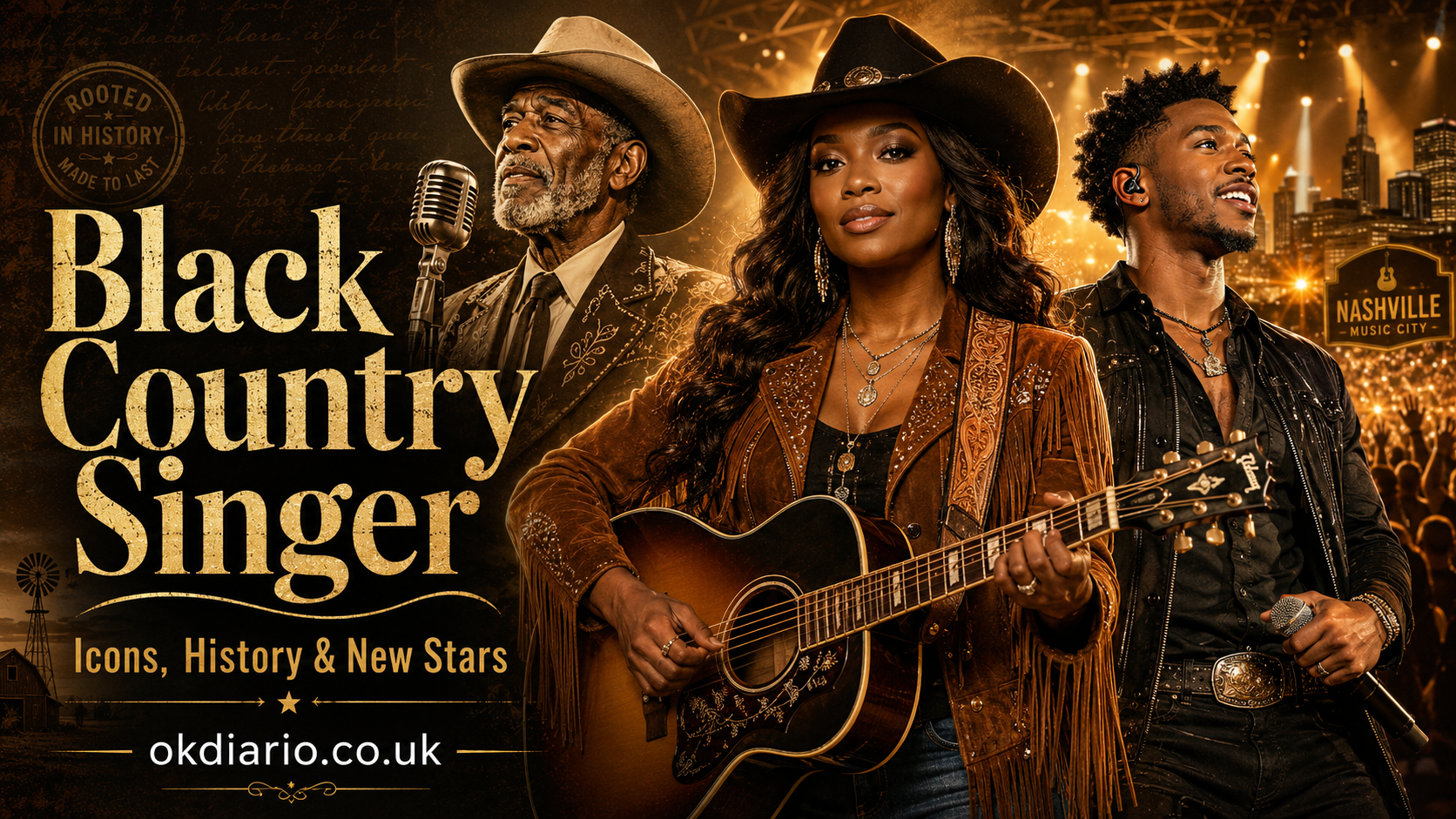
The Black Country Singer Story Is Bigger Than Most People Think
Country music has always been about real life. It tells stories of love, heartbreak, family, faith, hard work, lonely roads, small towns, front porches, and dreams that refuse to die. But there is one part of the story that has not always received the attention it deserves: the Black Country Singer.
For years, many people thought country music belonged to one image only. Cowboy hat. Southern drawl. Acoustic guitar. Pickup truck. Nashville stage. But the truth is much richer. Black artists have been part of country music from the beginning. Their influence runs through the banjo, blues, gospel, folk, soul, spirituals, and the deep storytelling that makes country music feel honest.
The Black Country Singer is not a new trend. It is not something that suddenly appeared because of streaming platforms or viral songs. Black artists helped build the roots of country music long before the industry gave them fair credit.
Today, that story is finally becoming harder to ignore. From DeFord Bailey and Charley Pride to Linda Martell, Darius Rucker, Mickey Guyton, Kane Brown, Brittney Spencer, Shaboozey, Tanner Adell, and many others, Black country artists are changing how people hear the genre.
This article takes a clear look at the icons, history, and new stars behind the Black Country Singer movement. It also explains why these artists matter, how they shaped the sound of country, and why the future of country music looks more open than ever.
What Is a Black Country Singer?
A Black Country Singer is a Black artist who performs, writes, records, or influences country music. That can include traditional country, country soul, Americana, bluegrass, country pop, folk, roots music, southern rock, and modern country crossover.
The term is simple, but the music is wide. Some Black country artists sing classic ballads with steel guitar and fiddle. Others blend country with R&B, gospel, pop, blues, or hip-hop. Some sound old-school. Others sound completely modern.
That variety is important. Country music has never been one narrow sound. It has always borrowed from different communities, instruments, accents, and life experiences. The Black Country Singer adds depth because Black music has always been tied to the soul of American music.
Why Black Artists Belong in Country Music
Black artists do not need permission to belong in country music. They helped create the sound.
The banjo has African roots. Blues shaped the emotional style of country singing. Gospel influenced harmony and vocal power. Folk music, spirituals, and rural storytelling helped form the style that later became known as country.
However, the music industry often separated artists by race. White rural artists were promoted through what became country music, while Black artists were often pushed into blues, gospel, R&B, or other categories. This division affected radio, record labels, awards, festivals, and history books.
Because of that, many people grew up thinking Black artists were outsiders in country. That idea is wrong. The Black Country Singer has always been part of the genre’s real story.
Key Black Country Singer Icons and New Stars
| Artist | Profession | Nationality | Known For | Career Impact |
|---|---|---|---|---|
| DeFord Bailey | Harmonica player, performer | American | Early Grand Ole Opry star | Helped shape early country performance |
| Charley Pride | Country singer | American | Classic country hits | One of country music’s biggest Black legends |
| Linda Martell | Country singer | American | Color Me Country | First Black woman to perform at the Grand Ole Opry |
| Darius Rucker | Singer, songwriter | American | Country hits after rock success | Helped bring Black country voices to modern radio |
| Mickey Guyton | Singer, songwriter | American | “Black Like Me” | Brought honest conversations into country music |
| Kane Brown | Country-pop singer | American | Modern country hits | Expanded country’s younger audience |
| Brittney Spencer | Singer, songwriter | American | Americana and country soul | Known for rich vocals and storytelling |
| Shaboozey | Singer, songwriter | American | “A Bar Song (Tipsy)” | Major country crossover success |
| Tanner Adell | Singer, songwriter | American | Modern country-pop style | New voice in the Black country wave |
| Reyna Roberts | Singer, songwriter | American | Bold country-rock energy | Rising artist with a powerful sound |
The Early Roots of Black Country Music
To understand the Black Country Singer, we need to go back before modern Nashville, before radio charts, and before the polished country industry.
Country music grew from many traditions. It came from working people, rural families, church gatherings, front porch performances, and community dances. Black and white musicians often lived near each other, learned from each other, and shared musical ideas.
The blues brought pain and truth. Gospel brought spirit and strength. Folk music brought storytelling. The banjo added rhythm and character. These pieces mixed over time.
Later, the industry divided sounds into marketing categories. But real music does not live inside boxes. A melody can travel. A rhythm can cross a field, a church, a street, or a stage. That is exactly what happened with country music.
The Black Country Singer is part of that deeper root system.
DeFord Bailey: The Pioneer People Should Know
DeFord Bailey is one of the most important early names in country music. He was a gifted harmonica player and one of the first major stars of the Grand Ole Opry.
His performances were full of feeling. He could imitate trains, bring blues flavor into country spaces, and hold an audience with nothing but a harmonica and raw talent. That kind of skill is rare.
Yet Bailey did not receive the long-term industry respect that many white performers received. His story shows both the beauty and unfairness of country music history. He helped build something, but his name was not always carried forward with the same energy.
Today, any serious conversation about a Black Country Singer should start with DeFord Bailey. He was not just part of the past. He helped create the path.
Charley Pride: The Legend Who Changed Everything
Charley Pride is probably the most famous Black Country Singer in classic country history. His voice was smooth, warm, and unmistakably country. He became a major star at a time when the industry was not built to welcome Black performers.
That makes his success even more powerful.
Pride did not become popular because of a marketing trend. He became popular because he could sing. His songs connected with people. His voice carried emotion without sounding forced. Fans believed him.
He had major hits, sold millions of records, earned awards, and became a Country Music Hall of Fame member. More importantly, he proved that country audiences could embrace a Black artist when given the chance.
Charley Pride’s career remains a reminder that talent was never the problem. Access was.
Linda Martell: A Voice Country Music Failed Too Soon
Linda Martell’s story is both inspiring and painful.
She was the first Black woman to perform at the Grand Ole Opry. Her album Color Me Country showed that she had the voice, style, and emotional honesty to stand proudly inside the genre. She sang with clarity and grace.
However, the music business did not protect her career the way it should have. She faced racism, limited support, and barriers that made it hard to continue.
For many years, Linda Martell was treated like a forgotten name. But she should never have been forgotten. She opened a door for every Black Country Singer who came after her, especially Black women in country music.
Her story matters because it shows how much talent the industry lost by keeping people out.
Darius Rucker: From Rock Star to Country Favorite
Darius Rucker had already achieved fame as the lead singer of Hootie & the Blowfish before moving into country music. That helped people know his name, but it did not make his country journey easy.
He still had to prove that he belonged.
And he did.
Rucker’s country voice feels natural. It has warmth, charm, and emotional honesty. His songs fit radio, but they also feel personal enough to connect with everyday listeners.
As a modern Black Country Singer, Darius Rucker helped open a new chapter. He showed that country radio could support a Black artist in the modern era. He also helped younger Black performers imagine a future in the genre.
Mickey Guyton: The Voice of Honesty
Mickey Guyton is one of the most important modern Black country artists because she sings with both beauty and courage.
Her song “Black Like Me” became a major moment because it did not hide from difficult truth. It spoke about race, identity, pain, and hope inside a genre that often avoids uncomfortable conversations.
That honesty is country music at its best.
Country has always claimed to be about real life. Mickey Guyton brought real life into the room. She did not soften her experience to make everyone comfortable. Instead, she used her voice to tell the truth.
A Black Country Singer like Mickey Guyton matters because she expands what country songs can talk about.
Kane Brown: A Modern Country-Pop Success Story
Kane Brown represents a newer generation of country music. He built his audience through social media and then turned that attention into chart success.
His sound blends country, pop, R&B, and modern production. Some fans love that fresh style. Others prefer more traditional sounds. But no one can deny his impact.
Brown helped bring younger listeners into country. He also showed that a Black Country Singer can succeed without copying the past. His music feels modern because it reflects the way many people listen today. They do not separate country, pop, rap, and R&B as strictly as older radio formats once did.
Kane Brown is part of country’s changing future.
Brittney Spencer: Soulful, Smart, and Deeply Human
Brittney Spencer has a voice that feels honest from the first note. She blends country, Americana, soul, and folk in a way that feels natural.
Her music does not need gimmicks. She relies on strong writing, warm vocals, and emotional depth. That makes her stand out.
Brittney Spencer is proof that the Black Country Singer story is not only about chart numbers. It is also about craft. It is about lyrics. It is about the kind of voice that makes you stop what you are doing and listen.
Her rise has been especially exciting for fans who love country music with heart and substance.
Shaboozey: The Crossover Star Bringing Fresh Energy
Shaboozey has become one of the biggest modern examples of country crossover success. His music blends country themes with hip-hop rhythm, pop appeal, and barroom storytelling.
His hit “A Bar Song (Tipsy)” became a major cultural moment. It brought together listeners who may not usually sit in the same musical lane. Some came from country. Some came from rap. Some came from pop playlists. Many simply liked the song because it was catchy, fun, and easy to sing along with.
That is why Shaboozey matters. He shows that the Black Country Singer can thrive in a streaming age where genre lines are softer.
Country music has always changed. Shaboozey is part of that change.
Beyoncé and the Bigger Country Conversation
Beyoncé’s country-inspired work brought huge attention to Black roots in country music. While she is not only a country artist, her project forced many people to ask an important question: Who gets to be seen as country?
That conversation helped shine light on Linda Martell, Tanner Adell, Brittney Spencer, Reyna Roberts, Tiera Kennedy, and other Black women connected to country and roots music.
Beyoncé’s role is important because mainstream attention can shift public understanding. However, it is also important to remember that Black country history did not begin with one album. The roots were already there.
Still, her work helped millions of listeners look deeper. That is a powerful thing.
New Black Country Singer Names to Watch
The future of country music is full of fresh voices. Some artists lean traditional. Some mix genres. Some bring soul. Some bring rock. Others bring pop, gospel, blues, or hip-hop influence.
Here are several names fans should know:
- Tanner Adell
- Reyna Roberts
- Brittney Spencer
- Tiera Kennedy
- BRELAND
- Shaboozey
- Willie Jones
- RVSHVD
- Chapel Hart
- The War and Treaty
- Madeline Edwards
- Allison Russell
- Rhiannon Giddens
- Valerie June
- Kashus Culpepper
Each artist brings something different. That is the beauty of it. There is no single way to be a Black Country Singer.
Why Representation Matters in Country Music
Representation is not about filling a quota. It is about telling the truth.
If country music claims to tell real American stories, then it must include Black stories too. It must include Black cowboys, Black church singers, Black small-town families, Black farmers, Black songwriters, Black heartbreak, Black joy, and Black survival.
When young fans see artists who look like them on country stages, it changes what they believe is possible. A young Black girl with a guitar should not feel like country music is closed to her. A young Black boy writing songs about his hometown should not feel like he has to choose another genre to be accepted.
The Black Country Singer matters because visibility can become permission.
The Sound of Black Country Music
Black country music does not have one sound. That is a strength, not a problem.
It may include:
- Classic country storytelling
- Gospel-style vocal power
- Blues guitar and emotional phrasing
- Banjo and fiddle roots
- Soulful harmonies
- Americana songwriting
- Country-pop hooks
- Southern rock energy
- Hip-hop rhythm
- Folk traditions
- R&B smoothness
- Spiritual themes
This wide sound makes country music more interesting. It reminds listeners that genres grow when artists bring their full selves into the music.
Challenges Black Country Artists Still Face
Even now, Black country artists can face major barriers.
Some struggle to get radio play. Some are left out of festival lineups. Some are treated as “new” even though Black artists have been part of country history for more than a century. Others face online hate or unfair criticism when they blend country with other sounds.
The industry has improved in some ways, but progress is not finished.
Fans can help by listening, sharing, buying concert tickets, following artists, requesting songs, and supporting platforms that promote Black country voices. Real change does not happen only through awards or headlines. It happens when audiences show up.
Why Black Country Artists Make the Genre Stronger
A stronger Black Country Singer presence does not take anything away from country music. It gives the genre more truth, more flavor, and more life.
Country music becomes better when more stories are allowed in. It becomes better when the stage reflects the real history of the music. It becomes better when old barriers fall and new voices rise.
Black country artists bring history, soul, pain, joy, rhythm, faith, and fresh perspective. That is not a threat to country music. That is country music growing into its full self.
Quick Facts About Black Country Singers
| Topic | Key Fact |
|---|---|
| Early pioneer | DeFord Bailey was an early Grand Ole Opry star |
| Classic legend | Charley Pride became one of country’s greatest stars |
| Historic woman | Linda Martell broke barriers for Black women in country |
| Modern radio name | Darius Rucker brought major Black success to country radio |
| Honest voice | Mickey Guyton used country music to speak about identity |
| Modern star | Kane Brown helped expand country-pop audiences |
| Crossover hitmaker | Shaboozey brought country fusion to mainstream listeners |
| Growing movement | New artists are reshaping country through streaming and touring |
Common Questions About Black Country Singers
Who was the first famous Black Country Singer?
DeFord Bailey is one of the earliest famous Black country performers. He became known through the Grand Ole Opry and helped shape early country performance.
Who is the most famous Black Country Singer?
Charley Pride is often called the most famous Black Country Singer because of his huge success, major hits, and lasting influence.
Are there modern Black country singers?
Yes. Modern Black country artists include Mickey Guyton, Kane Brown, Darius Rucker, Shaboozey, Brittney Spencer, Tanner Adell, Reyna Roberts, BRELAND, and more.
Why are Black country singers important?
They are important because Black artists helped shape country music’s roots and continue to push the genre forward today.
Is country music influenced by Black music?
Yes. Country music is deeply connected to blues, gospel, folk, spirituals, and banjo traditions, all of which include major Black musical influence.
Conclusion: The Black Country Singer Is Part of Country’s Heart
The Black Country Singer is not a trend. It is not a side story. It is part of the heart of country music.
From DeFord Bailey’s harmonica to Charley Pride’s legendary voice, from Linda Martell’s courage to Mickey Guyton’s truth, from Darius Rucker’s radio success to Shaboozey’s crossover power, Black artists have shaped country music in ways that deserve respect.
Country music is strongest when it tells the whole story. That means honoring the past, supporting the present, and making room for the future.
The next great Black Country Singer may already be writing songs in a bedroom, playing guitar on a porch, posting covers online, or performing in a small local bar. And when that voice rises, country music will be better for it.
If this article helped you discover new artists or understand the history more clearly, share it with another country music fan and keep the conversation going.